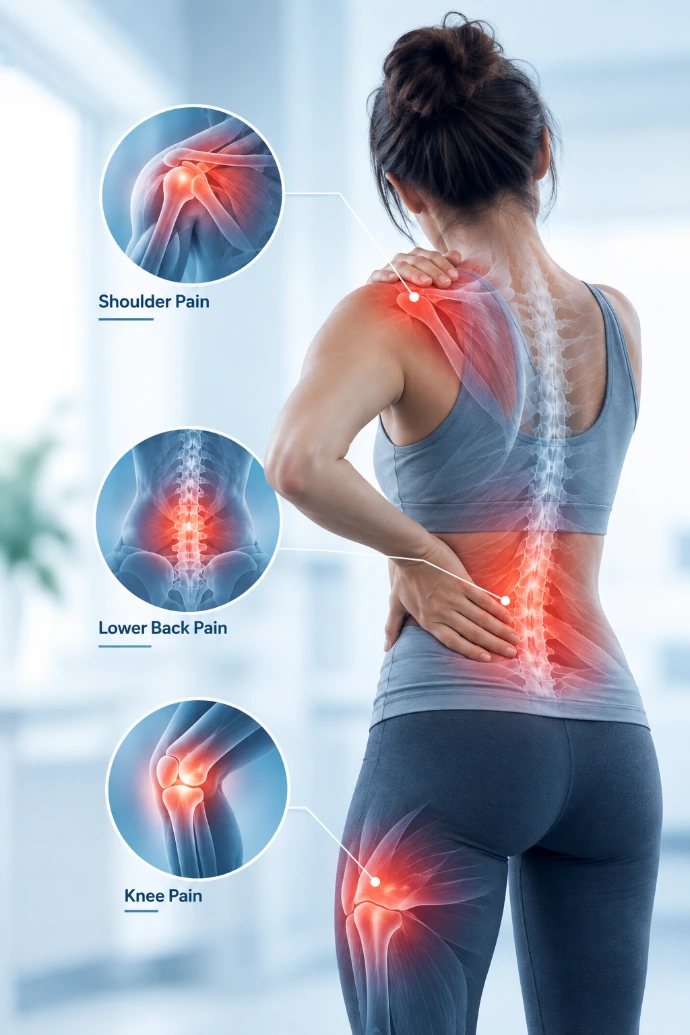
MUSCULOSKELETAL PAIN
Understanding & Managing Musculoskeletal Pain
Musculoskeletal pain can affect the muscles, joints, bones and surrounding soft tissues, impacting movement, function and everyday activities. Specialist assessment can help identify contributing factors and guide an individualised approach to care.
Home > Conditions We Treat > Musculoskeletal Pain
UNDERSTANDING MUSCULOSKELETAL PAIN
What Is Musculoskeletal Pain?
Musculoskeletal pain affects the muscles, bones, joints, tendons, ligaments and other soft tissues. It may develop following an injury, through wear and tear, or as part of an ongoing condition, and can range from localised discomfort to persistent pain that affects movement and daily activities.

Muscle & Soft Tissue Pain
Pain involving muscles, tendons and surrounding soft tissues.
Joint Pain
Pain and stiffness affecting joints and movement.
Back & Neck Pain
Pain involving the spine and surrounding structures.
Injury-Related Pain
Pain following injury, strain or physical trauma.
Common Conditions We See
Musculoskeletal pain can present in many ways. Common conditions we assess and manage include:
Neck Pain
Back Pain & Sciatica
Shoulder Pain
Hip & Knee Pain
Joint Pain & Arthritis
Persistent Pain Following Injury

How Musculoskeletal Pain Is Managed
A Personalised Approach to Musculoskeletal Pain
Effective pain management begins with understanding the individual, the nature of their pain and how it affects their daily function. Care is tailored to each patient’s needs, with the aim of reducing pain, improving movement and supporting a better quality of life.
Assessment
Understanding your symptoms, medical history and how pain affects your function.
Individualised Care
Developing a management approach based on your condition and individual needs.
Improving Function
Supporting better movement, function and participation in everyday activities.
Take the Next Step Towards Better Pain Management
If musculoskeletal pain is affecting your movement, function or everyday life, specialist assessment can help determine the appropriate next steps in your care.